Contemporary literary productions are now manufactured in the literal sense through the limitless capabilities of artificial intelligence. At the same time, they perpetuate grave stereotypes of mechanised literary creativity. The sophistication of today’s cut-and-paste literary processes and various forms of literary construction has reached such an alarming level that even advanced plagiarism-detection technologies often prove inadequate in identifying plagiarised writing.
Every work produced in the present age appears to contain innumerable, untraceable and uncountable sources. This phenomenon of literary manufacturing, co-piloted by ghostwriters and ghostpublishers, has evidently established its sinister influence within the worlds of literature and publishing. Feeling suffocated by such an artificially created pseudo-literary climate, I find myself compelled to withdraw from the art of genuine writing.
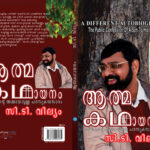
Yet I remain confronted by profound inner creative turmoil. I cannot silence my pen, nor can I cease writing. Consequently, I have embraced a form of writing that lies beyond the reach of either artificial intelligence or plagiarism. In short, I have begun a journey inward into the true landscape of my soul. This is an autobiographical exploration. It is a confession addressed to my beloved mother, offered openly and without concealment. Indeed, it is my public confession to all of you.
At this fag end of my life, the only aspiration that remains within me is the pursuit of redemption. What I now seek is either the Occidental concept of Purgatory or the Oriental ideal of Moksha, both elusive, intangible, and ultimately beyond the reach of my rational understanding. Yet this is the path upon which I must seek atonement, endure suffering, and finally repent. The experience of either Purgatory or Moksha, however, is exceedingly difficult to attain. Nevertheless, the conventional conceptions of Heaven, Hell, and Purgatory reassure me, or at least I believe, that I possess the eligibility to experience either these spiritual or virtual realms, in fact, understood as Heaven, Hell, Purgatory, or Moksha.
Throughout my adult life, I have read numerous philosophical and spiritual reflections that affirm the possibility of life after death. If the existence of the soul is accepted on logical or philosophical grounds, and if the soul itself is indeed immortal, then perhaps I may one day record my experiences of Heaven, Hell, Purgatory, or Moksha. Should the same destiny await my readers, you too may one day read and witness my testimony concerning those transcendent realms. Such writings will constitute the final chapter and ultimate epilogue of this autobiography.
Until then, you may regard this autobiographical journey, together with the people who inhabit its pages, as fiction or, at best, as narratives born of lived experience.

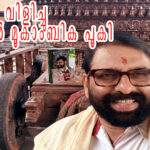
Writing is the intellectual interpretation of vision. Vision is the window open to philosophy. This is the scriptural metamorphosis of Dr. C.T. William’s writing. It was this scriptural phenomenon that inspired Dr. C.T. William to write several of his remarkable literary works. Being an Indian writer who blossomed in the Gods' own country, Kerala, his literary creations are debated among the chosen intellectual minority rather than the elected popular majority.
C.T. William has nine books to highlight his literary splendors. Manava Vibhava Vikasana Thathwachinthayum Arthashastravum (Malayalam: Philosophy, 2005, Publishers: Kerala Sahithya Academy, Thrissur), Ithuvare (Malayalam: Poems, 2009, Publishers: Current Books, Thrissur), Shabdham Ayodhya Vare Ethumbol (Malayalam: Criticism, 2011, Publishers: Sign Books, Thiruvananthapuram), Vilapatthinte Ilakal (Malayalam: Poems, 2013, Publishers: Maluben Books, Thiruvananthapuram), Nakshathrangal Chuvakkunnilla (Malayalam: Travelogue, 2013, Publishers: Dharmartham Books, Thrissur), Shesham Sheshan (Malayalam: Biography, 2013, Publishers: Mathrubhumi Books, Kozhikode), Kautilya Unleashed (English: Management, 2014, Publishers: Partridge India, A Penguin Random Company), Seethamar Karayukayaanu (Seetha is crying), (Malayalam: Poems, 2018: Publishers: Mentor Books, Thrissur) and Swargeeya Narakam (The heavenly Hell), (Malayalam: Travelogue, 2018: Publishers: Mentor Books, Thrissur).
It was Dr. C.T. William’s unquenchable thirst for pragmatic philosophy that resulted in the writing of the book "Kautilya Unleashed" (published by Partridge India). The practical philosophy he invented and got inspired by the philosophy of human resource development that is inherent in the great Indian classic Arthashastra of Kautilya-the cosmic guru who wrote the Bible of administration and Management.
This book is an authentic guide and hand book for the global citizen to lead a successful life personal, political as well as organizational by applying the gospels of Human Resource Development and Management that have deep-rooted in the Oriental Philosophy. It is the Bible of management, specifically of human resource development. It consists of the gospels of administration, political diplomacy, philosophy of human resource development, economics, psychology of society, and the ethics of war and peace.
"The book Kautilya Unleashed will appeal to readers because it is an essential practical guide for global citizens, students of management, and the leaders of the world," Dr. William said. " Compared to other books of its kind, it is a simplified version of philosophic management thoughts in which students of management and general readers could easily follow and encapsulate," he added.
"Kautilya Unleashed" is the fruitful effort of a decadal intellectual meditation of the author. It will energise the readers and inspire them to work for the reconstruction of themselves, their society, nation, and the world.